

 ISSN: 1323-8930
Editor's Choice
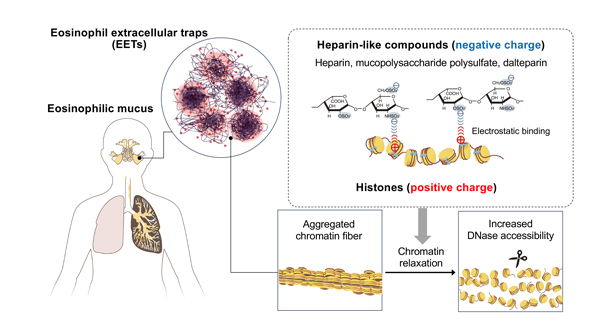
Editor’s comment: In eosinophilic rhinosinusitis (ECRS), mucus rich in eosinophil extracellular traps (EETs) is highly viscous and hydrophobic, contributing to impaired mucus clearance. Arima et al. (Japan) show that heparin-like compounds improve these abnormal mucus properties, likely by interacting with EET-associated histones and thereby relaxing EET structures. These effects further enhance DNase-mediated mucus dissolution, suggesting their potential as novel adjunctive mucolytic agents for ECRS.
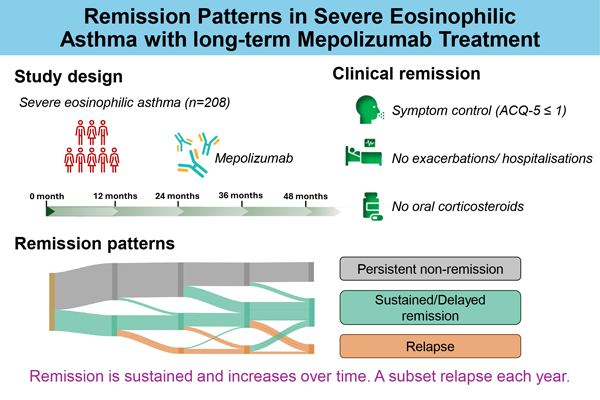
Editor’s comment: Whether clinical remission during long-term mepolizumab treatment is sustained or is followed by relapse remains unclear.
In this real-world study of 208 patients with severe asthma, Thomas et al. (Australia) reported that 29.9% achieved remission at 24 months, with 20.1% showing sustained remission and 9.2% experiencing relapse. Over four years, remission rates increased, but 17% eventually relapsed, indicating that remission is a dynamic rather than a fixed disease state. These findings highlight the importance of long-term monitoring even after remission is achieved.
Review Series: Childhood asthma
Asthma is one of the most common chronic diseases of childhood. Precisely because asthma is so common, its clinical importance can easily be overlooked; it is a disease that must not be underestimated.
We planned this Review Series with the aim of providing an overview of childhood asthma from three distinct perspectives: recent advances, environmental factors, and biomarkers. In doing so, we sought to highlight both the current state of the field and the questions that remain.
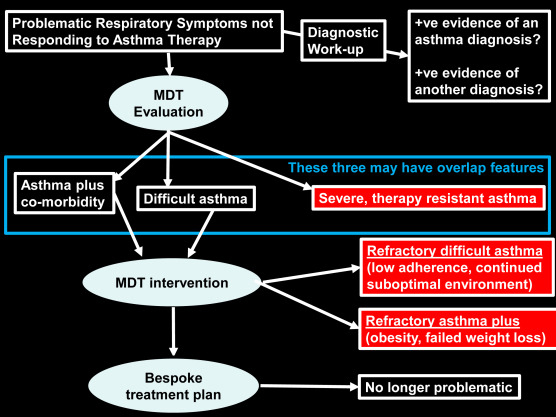
Bush provides a comprehensive overview of recent advances in childhood asthma. Particularly valuable is his extensive discussion of preschool asthma, one of the most challenging areas in the field.
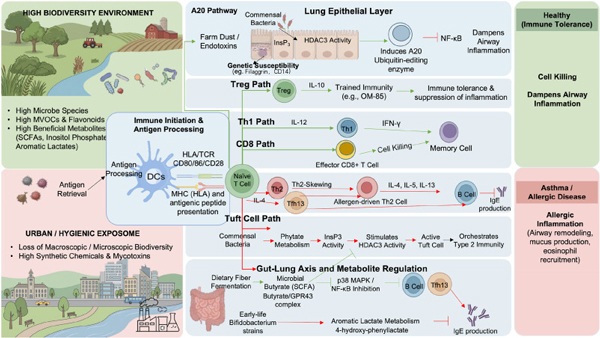
Xing et al. describe the environmental factors involved in the development and exacerbation of asthma. A particular strength of their review is that it goes beyond a comprehensive list of environmental factors to examine the mechanisms underlying their effects.
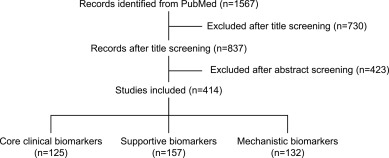
Fujisawa et al. give us a comprehensive account of biomarkers in childhood asthma, based on a systematic literature search.12) They organize the clinical significance and limitations of biomarkers already used in practice, such as fractional exhaled nitric oxide (FeNO) and blood eosinophil counts, according to two clear dimensions: clinical maturity and intended use.
