

 ISSN: 1323-8930
Volume 75, Issue 2 (April 2026)
Review Series: An evolving understanding of drug allergy: Novel basic mechanisms and their clinical impact
Recent progress has greatly changed our understanding of basic mechanisms and clinical aspects in drug allergy. In this issue of Allergology International, three groups of scientists and clinicians involved in drug allergy have contributed to a review series entitled An evolving understanding of drug allergy – novel basic mechanisms and their clinical impact. A sophisticated approach for basic and clinical aspects of drug allergy will definitely enhance the clinical unraveling of immunological mechanisms, clinical assessment, and prompt management. These findings collectively enhance the clinical impact on drug allergies, saving the lives of ADR patients.
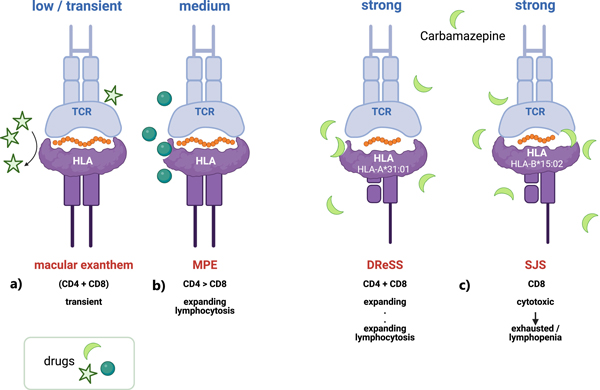
Pichler et al. wrote one review article and one original paper for this issue. Long ago, the authors proposed the p-i mechanism (pharmacological interaction with immune receptors), now widely accepted, to explain T cell activation. Drug reaction with eosinophilia and systemic symptoms (DReSS), also called drug-induced hypersensitivity syndrome (DIHS), is a severe T cell-mediated hypersensitivity reaction, presumably involving a distinct p-i mechanism. In the review article, they propose four phases based on the status of p-i stimulated T cells: the clinically silent phase, the acute phase, the viraemic and autoimmunity phase, and the chronic phase.
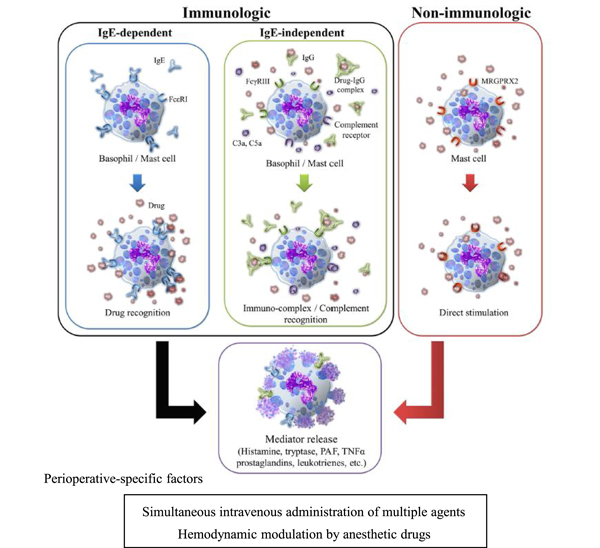
Takazawa has realized a powerful approach into perioperative anaphylaxis, occurring in approximately 0.01 to 0.02% of all subjects receiving general anesthesia.6 The Japanese Epidemiological Study for Perioperative Anaphylaxis (JESPA) prospectively analyzed perioperative anaphylaxis cases and control cases; perioperative anaphylaxis can correctly be diagnosed based on clinical findings and tryptase measurement.
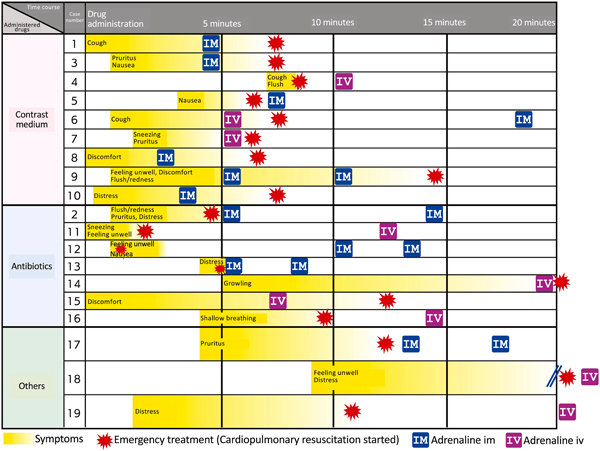
In Yamaguchi et al. article, they mention governmental activities related to drug-induced deaths related to anaphylactic shock. The review describes how prompt adrenaline use is realized in clinical situations in Japan, probably reflecting nationwide notification of the importance of prompt diagnosis and treatment using intramuscular adrenaline. A successful management approach may be useful for suppressing deadly episodes of anaphylactic shock.
