

 ISSN: 1323-8930
Volume 75, Issue 3 (July 2026)
Editor's Choice
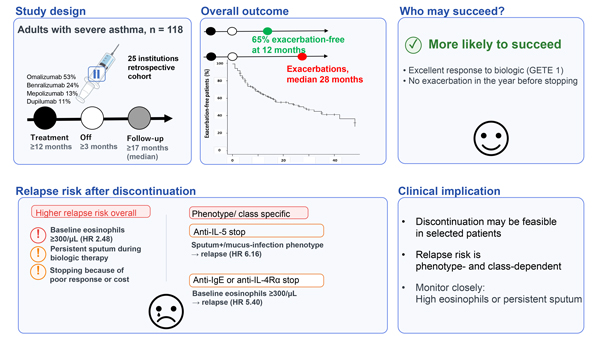
Editor’s comment: Biologics are highly effective in severe asthma—but can they be safely discontinued? In this retrospective study of 118 patients, Nagasaki et al. (Japan) reported that approximately 65% remained exacerbation free 12 months after stopping treatment. Patients with a strong treatment response and no recent exacerbations were more likely to discontinue successfully. In contrast, baseline eosinophilia, persistent sputum symptoms, and discontinuation due to poor response or cost were associated with relapse, with some variation across biologic classes. These findings suggest that discontinuation is feasible in carefully selected, well-controlled patients.
On non-biologic treatment clinical remission in adult-onset asthma: A 20-year cohort study in Taiwan
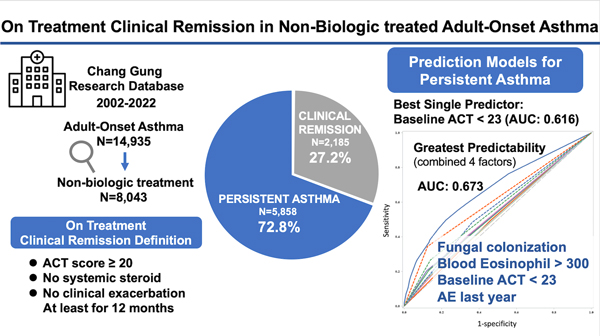
Editor’s comment: How often can asthma patients achieve remission without biologics? In a large real-world cohort spanning 20 years, Lin et al. (Taiwan) retrospectively analyzed the records of 8,043 adults and found that 27% achieved remission—defined as good symptom control, no systemic steroid use, and no exacerbations for ≥12 months. Persistent disease was associated with smoking, impaired lung function, eosinophilia, fungal colonization, poor baseline symptom control, and recent exacerbations. Among these, poor baseline symptom control emerged as the strongest predictor of failure to achieve remission. These findings indicate that remission is achievable with standard therapy—and that simple clinical markers can help identify patients unlikely to reach it.
This data-driven approach helps clarify which allergens drive each person's allergic reactions.
